Enterprise AI: Definition, Use Cases & Technologies

Enterprise AI is no longer experimental — it’s becoming core infrastructure for operations in finance, healthcare, retail, and beyond.
According to McKinsey, executives expect an eightfold increase in AI-enabled workflows by 2025. Yet most enterprises remain unprepared.
Fewer than one in four companies have rolled out large language models (LLMs) company-wide, and many still lack the orchestration, data infrastructure, and governance required to scale effectively.
This article unpacks what enterprise AI truly means in 2025 — from key enabling technologies to implementation best practices.
What is enterprise AI?
Enterprise AI refers to the strategic use of artificial intelligence to transform how large organizations operate, compete, and grow. It’s not just about automating tasks — it’s about embedding intelligence into the core of business-critical systems to accelerate decision-making, reduce costs, improve compliance, and unlock new opportunities for innovation.
Unlike experimental or small-scale AI deployments, enterprise AI must perform reliably across legacy infrastructure, siloed data, and complex regulatory environments. It must also be secure, explainable, and resilient — with built-in governance, human oversight, and the ability to scale across departments, regions, and business units.
Enterprise AI creates value when it is integrated end-to-end: supporting everything from risk modeling and demand forecasting to personalized customer experiences and streamlined clinical documentation.
Key technologies driving enterprise AI adoption
Enterprise AI adoption is not driven by a single innovation, but by the strategic integration of multiple technologies and disciplines. Here are the key components:
Automation and orchestration
Early AI adoption focused on automating manual, repetitive tasks — from data entry to invoice reconciliation. These improvements enhanced efficiency and reduced operational costs. However, automation alone is no longer enough.
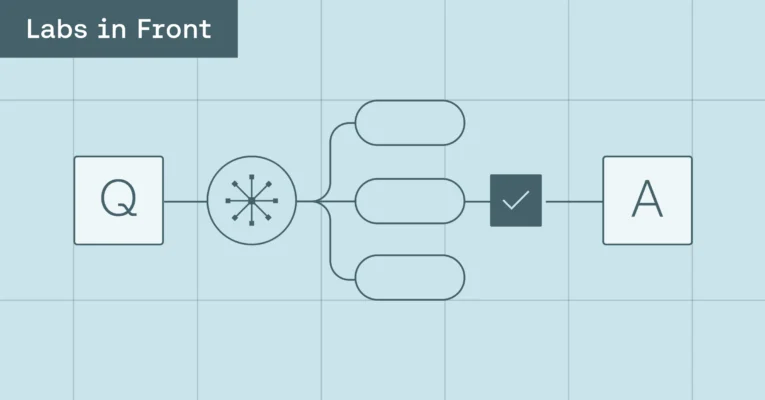
Orchestration — the coordination of AI tools, models, workflows, and teams across the enterprise — is now critical. Without it, AI systems remain siloed, inconsistent, or unscalable, limiting enterprise-wide impact.
A dedicated orchestration layer acts as the connective tissue between systems, ensuring that AI processes are not only integrated, but also governed, repeatable, and aligned with enterprise standards.
True orchestration enables dynamic collaboration between humans and machines, ensuring AI outputs align with enterprise goals, governance policies, and operational standards.
Agentic AI and generative AI
Generative AI and large language models (LLMs) are transforming content creation, summarization, and query response in enterprise settings. These models can generate product descriptions, draft emails, and parse documents at scale.
Agentic AI — systems capable of independently pursuing goals using enterprise data and tools — is quickly becoming central to large-scale transformation. These systems can autonomously plan multi-step tasks, make decisions, and interact with enterprise platforms without direct human prompts. While traditional AI reacts, agentic AI acts.
For example, an agentic workflow could resolve a customer issue by accessing CRM data, generating a tailored response, and scheduling follow-up actions — all while adhering to enterprise policies and performance guardrails.
Enterprise AI platforms
Scaling AI across an enterprise requires more than powerful models. It demands a secure, flexible, and production-grade platform — one that integrates development tools, deployment pipelines, performance monitoring, and governance into a unified system.
Many enterprises are also prioritizing private AI — platforms that run within secure, internal environments to protect sensitive data, ensure compliance, and maintain control over model behavior. Private AI enables organizations to leverage generative and predictive capabilities without exposing proprietary information to public or third-party systems.
Effective deployment depends on strong data management, scalable model training, centralized model registries for performance tracking, and real-time monitoring to ensure reliability and compliance.
What are common applications of AI in the enterprise?
Enterprise AI is transforming how large organizations operate across industries. By embedding AI into core systems and workflows, businesses can enhance productivity, improve decision-making, and deliver better experiences to customers and employees.

Below are some of the most impactful enterprise AI use cases across three key sectors:
Healthcare
In healthcare, enterprise AI supports complex, high-stakes environments where accuracy and speed are critical. Key applications include:
- Connecting disparate electronic health records (EHRs) to streamline patient visits and reduce wait times
- Summarizing clinical notes and documentation using generative AI
- Assisting in diagnosis by analyzing structured and unstructured medical data
- Enhancing medical image analysis for X-rays, MRIs, and CT scans
Generative AI in healthcare is gaining momentum as organizations increasingly adopt domain-specific models trained on clinical language.
These models help improve documentation quality, accelerate administrative workflows, and support more personalized, compliant patient care — all while enhancing accuracy, reliability, and auditability in sensitive environments.
Retail
Retailers use enterprise AI to drive personalization, operational efficiency, and omnichannel innovation. Key use cases include:
- Personalizing customer experiences through AI-powered recommendation engines and dynamic pricing
- Optimizing inventory with demand forecasting and real-time supply chain adjustments
- Enhancing customer service via chatbots and virtual assistants available 24/7
- Detecting fraud in digital payments and transactions
Generative AI in retail is helping brands scale content creation and customer engagement — from generating localized product descriptions and promotional copy to enabling natural language interfaces in shopping apps. When integrated with enterprise systems, these models improve speed, consistency, and customer relevance across touchpoints.
Enterprise AI also supports retail expansion by enabling data-driven decision-making, scalable testing of new business models, and streamlined operations across channels.
Finance
In finance, enterprise AI strengthens security, accelerates decision-making, and automates high-volume, high-stakes workflows. Use cases include:
- Detecting fraud by identifying patterns in financial transactions
- Managing risk through predictive analytics and scenario modeling, including algorithmic trading
- Automating loan processing, underwriting, and compliance checks
Generative AI in finance is being applied to streamline document generation, regulatory reporting, and customer communication — using domain-specific models trained on financial language to ensure clarity, accuracy, and auditability. These capabilities help institutions meet compliance standards while improving speed and consistency across sensitive workflows.
Financial institutions are also adapting generative AI models for sector-specific terminology, enabling accurate, audit-ready outputs in regulated environments.
How can your organization implement enterprise AI?
Implementing enterprise AI requires more than choosing the right model — it demands a cohesive strategy spanning technology, data, and infrastructure.
Choose your enterprise AI tech stack
The first step is selecting the right enterprise AI platform. Leading vendors now offer comprehensive solutions for developing, deploying, and scaling AI applications. Some platforms cater to data scientists with full-featured machine learning (ML) environments, while others provide low-code tools that support a broader range of users.
Unify structured and unstructured data
AI systems are only as effective as the data they can access. To deliver value, enterprise AI must ingest and integrate both structured and unstructured data — from CRMs and ERPs to internal documents, emails, and knowledge bases.
Modern platforms increasingly use retrieval-augmented generation (RAG) to extend large language models (LLMs) with enterprise-specific data. RAG allows models to reference internal knowledge in real time, improving accuracy, contextual understanding, and relevance.
By grounding AI in proprietary information, RAG enables alignment with the organization’s goals, terminology, and workflows — something public models cannot achieve. However, this requires a unified data layer governed by a common management framework.
Select a federated data model
Scaling enterprise AI requires a modern data architecture capable of handling massive volumes of high-quality data securely and in real time. This includes elastic, horizontally scalable infrastructure that supports persistent storage, event-driven processing, machine learning, and visualization.
A federated data architecture integrates data from distributed, diverse systems — including structured, semi-structured, and unstructured sources — into a unified, queryable model. This enables enterprises to generate a complete, real-time view of their operations.
A well-implemented federated model can manage petabyte-scale datasets across thousands of disparate systems, delivering the scale, speed, and reliability required for AI to operate effectively across the organization.
How AI is reshaping the enterprise
Enterprise AI is not just about efficiency — it’s about creating new opportunities for innovation, resilience, and growth. When deployed with the right architecture, data governance, and orchestration, siloed experimentation can evolve into scalable transformation.
For decision-makers, now is the time to define how AI will serve your enterprise — not just in isolated use cases, but as a foundational part of how you operate, compete, and evolve.
FAQs
-
Enterprise AI is purpose-built for scale, control, and mission-critical workflows. Consumer AI, by contrast, is often one-size-fits-all — suitable for general productivity or personal use, but lacking the traceability, security, and compliance capabilities required by enterprises.
-
Generative AI is a capability. Enterprise AI is a system. Enterprise AI operationalizes generative (and agentic) AI with the governance, orchestration, deployment frameworks, and domain-specific tuning needed to deliver consistent, reliable value in enterprise environments.